Nintendo Pushed Mario Into Movies Because Console Growth Is Tapped Out
2 APRIL, 2026 - mario
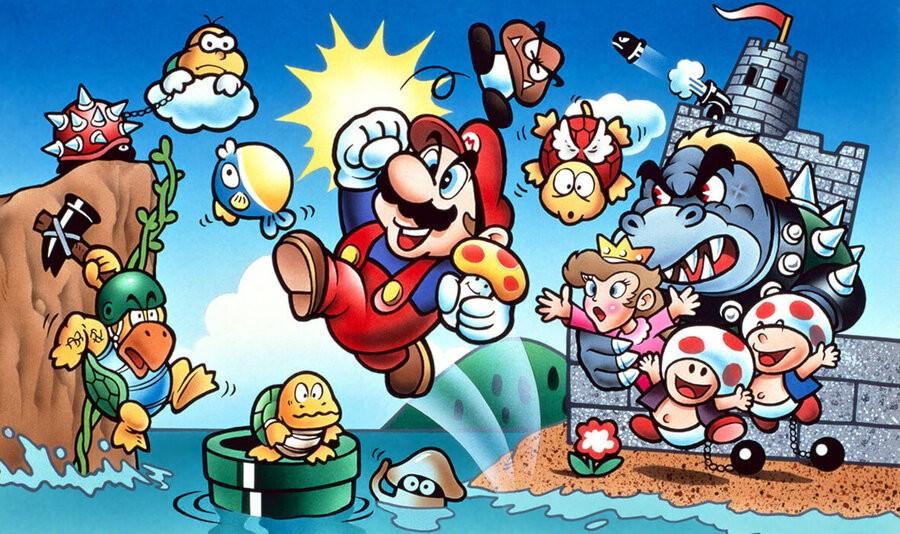
Image via Nintendo
In a surprisingly candid admission that has sent ripples through the gaming industry, Nintendo has revealed the strategic reasoning behind its aggressive push into the film industry. The Japanese gaming giant, long known for its protective stance over its beloved intellectual properties, has acknowledged that traditional console hardware growth has reached its ceiling, prompting the company to seek new revenue streams through Hollywood adaptations of its iconic franchises.
The statement marks a pivotal moment in Nintendo's century-long history, signaling a fundamental shift in how the company views its future. For decades, Nintendo has built its empire on the foundation of hardware innovation, from the original Famiday to the groundbreaking Nintendo Switch. Now, executives are openly admitting that this model alone cannot sustain the growth shareholders and stakeholders expect in an increasingly competitive entertainment landscape.
The numbers tell a compelling story. The Nintendo Switch, despite being one of the most successful consoles in gaming history with over 140 million units sold worldwide, has seen its sales momentum slow considerably in recent years. Meanwhile, The Super Mario Bros. Movie, released in 2023, shattered box office records by earning over $1.3 billion globally, making it the highest-grossing video game adaptation of all time. The math, it seems, was impossible to ignore.
Industry analysts have long speculated about Nintendo's Hollywood ambitions, but hearing the company explicitly connect its film strategy to console market saturation represents a remarkable moment of corporate transparency. Nintendo has historically been notoriously tight-lipped about its business strategies, preferring to let its products speak for themselves. This new openness suggests a company that recognizes the need to reshape its narrative for investors and fans alike.
The implications extend far beyond Mario's animated adventures. Nintendo has already confirmed that a sequel to The Super Mario Bros. Movie is in development, along with a highly anticipated Legend of Zelda live-action film. Reports suggest that adaptations of Metroid, Donkey Kong, and other flagship franchises are also in various stages of planning. What once seemed like cautious experimentation now appears to be a full-scale strategic pivot.
This shift represents a complete reversal from Nintendo's previous Hollywood experience. The infamous 1993 Super Mario Bros. live-action film, starring Bob Hoskins and John Leguizamo, was such a critical and commercial disaster that it reportedly made Nintendo swear off film adaptations for nearly three decades. The company's eventual partnership with Illumination Entertainment, the studio behind Despicable Me and Minions, was years in the making and required Nintendo to maintain unprecedented creative control over the project.
That insistence on quality control appears to have paid dividends. The Super Mario Bros. Movie succeeded not just financially but also critically, earning praise for its faithful representation of the games' aesthetic and characters. This success has emboldened Nintendo to accelerate its entertainment division plans, with company president Shuntaro Furukawa repeatedly emphasizing the importance of reaching audiences beyond traditional gaming.
The console gaming market's maturation presents real challenges for hardware manufacturers. Unlike the smartphone industry, which benefits from annual upgrade cycles and near-universal adoption, dedicated gaming hardware appeals to a relatively fixed audience. While Nintendo has shown remarkable ability to expand that audience through innovations like the Wii's motion controls and the Switch's hybrid design, there are only so many people willing to purchase dedicated gaming devices.
Nintendo's competitors have recognized similar limitations. Sony has invested heavily in its PlayStation Productions division, bringing franchises like The Last of Us and Uncharted to screens. Microsoft's acquisition of Activision Blizzard was partially motivated by the desire to control valuable intellectual properties that can be leveraged across multiple entertainment mediums. The gaming industry's biggest players are all hedging their bets against hardware commoditization.
For Nintendo, the move into film represents both opportunity and risk. The company's intellectual properties are arguably the most valuable in gaming, with characters like Mario, Link, and Pikachu enjoying recognition that rivals Disney's most famous creations. However, translating interactive experiences into passive entertainment requires different skills and sensibilities. Not every franchise will adapt as naturally as Mario's colorful platforming adventures.
The Zelda film, in particular, will test Nintendo's Hollywood ambitions. Unlike Mario's straightforward heroics, Zelda's appeal lies in exploration, puzzle-solving, and a sense of discovery that may be difficult to capture in a two-hour runtime. The announcement that it will be live-action rather than animated adds another layer of complexity and potential scrutiny from devoted fans.
What remains clear is that Nintendo sees its future as an entertainment company that happens to make games, rather than a gaming company that occasionally dabbles in other media. This evolution may disappoint purists who wish the company would focus exclusively on interactive experiences, but it reflects the economic realities of a maturing industry. Console growth may indeed be tapped out, but Nintendo's characters have never been more valuable. The company appears determined to extract maximum value from every last coin block.